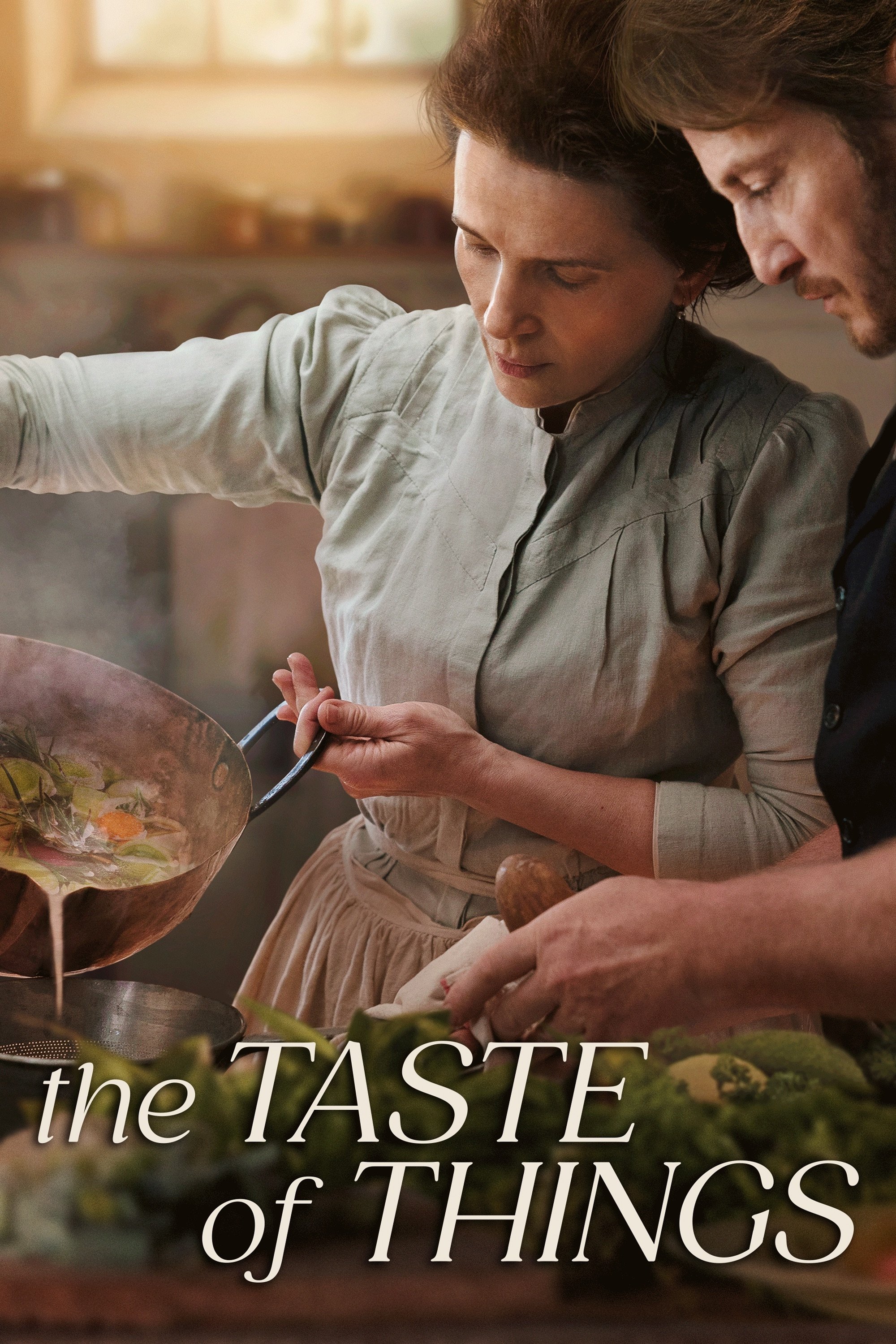

A truly beautiful film. It begins at a slow simmer, 19th-century food porn, meticulously crafted. But as the dishes come together with patience and care, so too do the characters and their quiet, heartfelt stories. It’s a simple narrative, yes, but like the gourmet meals lovingly prepared on screen, there’s a softness and delicacy that give it depth and resonance. Like Chocolat or Like Water for Chocolate (though this one contains no chocolate), here’s another film that artfully intertwines food and romance, seducing us with sensory pleasures while gently exploring the hunger for connection.
The performances anchor the film from beginning to end with remarkable authenticity. Juliette Binoche brings a graceful elegance to her role, but it’s Benoît Magimel who truly captivates. With his expressive, weathered face, especially framed by that thoughtful beard, he communicates volumes with subtle gestures. No surprise he’s been acting for 35 years in France; his presence is magnetic.
Even Bonnie Chagneau-Ravoire impresses, with a quiet cuteness of a young Anya Taylor-Joy and a maturity rare in child performances. The children’s understated roles are delivered with surprising depth, further enhancing the film’s grounded emotional tone. And those period costumes are incredible. The fact that this film didn’t win an Oscar for Costume Design feels like a glaring oversight.
Exterior shots look plucked straight from an impressionist painting. Interiors glow with warm, golden light, whether it’s streaming through open windows, diffused through doorways, or softly flickering from scattered candles and oil lamps. The lighting, the long, sensuous takes, the graceful camera work all create a seduction of the senses, mirroring the seduction of the characters by the food they prepare and share.
Beautiful final shot and moment. For a fleeting moment, I felt lonely in that beautiful kitchen, but a bit of movie magic pulls us back to the heart of the story to close it out.
How lovely would it be to live in such a world? The film invites us to dream of it. Yet, for all its beauty, the world for this story is clearly romanticized. What does he actually do for a living? Is preparing the occasional meal for a visiting prince enough to sustain him and his household? Where’s the conflict, the hardship, the messiness of real life? Do the children never misbehave? Does a soufflé never fall flat or catch fire? As seductive as it is, everything is just a little too perfect. I wonder if the story could have been made even more authentic with a touch more realism.
 I'm a
I'm a
Recent Comments