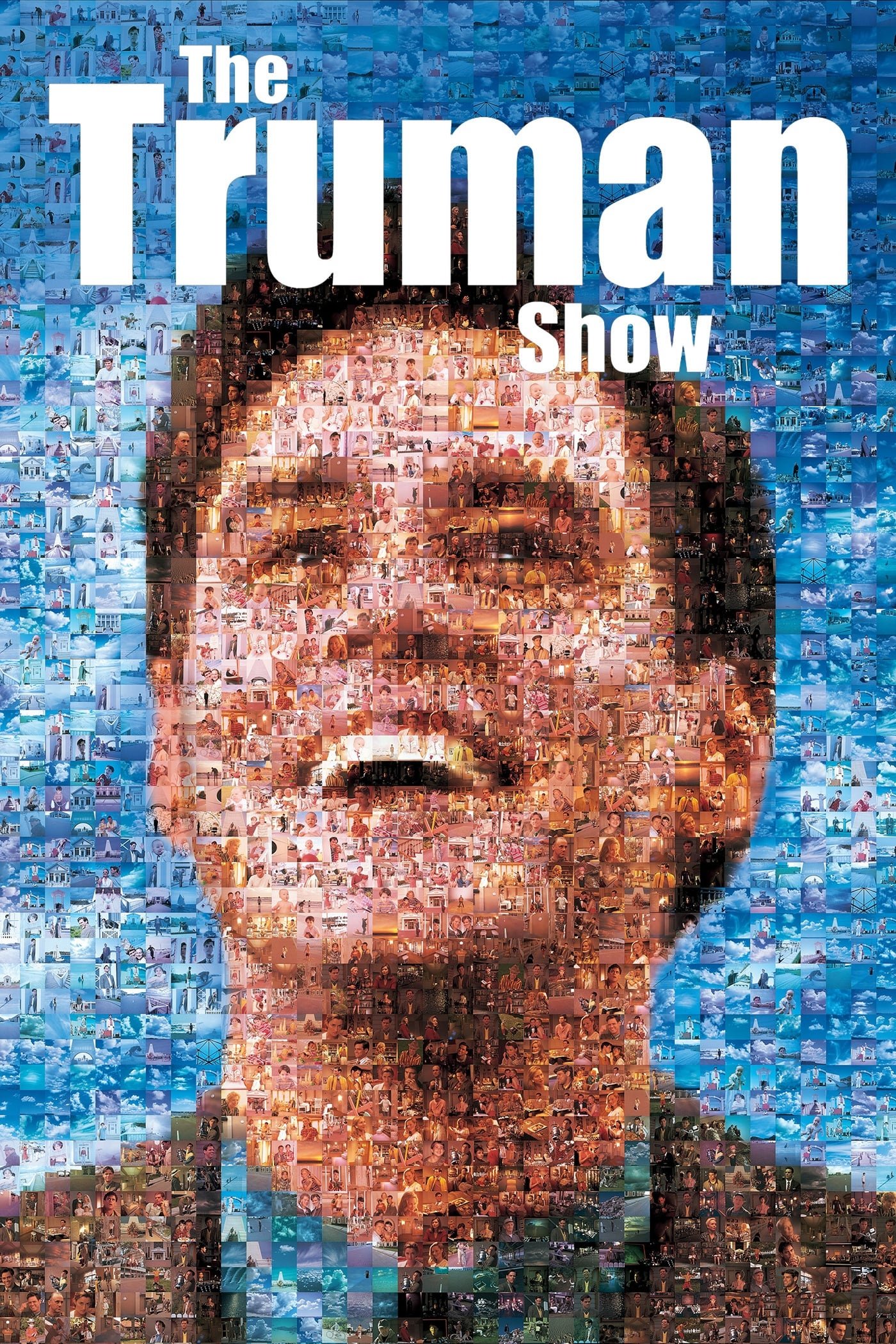

A smart allegory, perhaps no surprise coming from Peter Weir and Andrew Niccol. But it’s also a lot of fun.
What I got was an engaging drama and witty satire about life, television, and the nature of reality. Jim Carrey completely nails it (dare I say Oscar-worthy?), striking the perfect balance between restraint and his trademark comedic energy. Laura Linney is also terrific as Meryl, though her performance is ultimately overshadowed by Truman’s growing indifference toward her. By the end, Truman doesn’t give a damn about Meryl, and neither do we. Ed Harris is perfectly cast as Christof.
The premise is fascinating, but it raises a few questions.
For starters, I don’t care what anyone says: a man raised in a world populated entirely by actors would have serious psychological problems. No matter how convincing the performances, the relationships wouldn’t be real. Surrounded by fake parents, friends, and lovers, Truman would surely be psychologically damaged. There’s something about the randomness, spontaneity, and unpredictability of human relationships that simply can’t be replicated through a scripted upbringing. How could Truman have gone 33 years without catching on? Christof’s explanation that “we accept the reality of the world with which we’re presented” is thought-provoking, but hardly sufficient to explain how they managed to fool him for his entire life.
I also question the size of the studio. The brief graphic we see depicts a relatively small, Epcot-like dome, perhaps four or five miles in diameter. Could a man realistically live 33 years without venturing beyond such a confined space, or at least becoming suspicious of its limitations?
And why does everything suddenly start falling apart at once? After decades of successfully maintaining the illusion, the show’s elaborate machinery seems to unravel almost overnight.
My biggest issue, though, is with the audience’s reaction to Truman’s escape.
Why are the security guards, who’ve been such devoted fans of the show, so delighted when Truman finally ventures into the real world, effectively bringing their favorite program to an end? They casually shrug and ask what else is on television, despite presumably having followed Truman’s life for decades.
In fact, everyone seems thrilled that Truman has escaped. But these are the same people who’ve spent 33 years enthusiastically watching his manufactured existence. Wouldn’t at least some of them be disappointed, even devastated, to see the show end? Christof and his global audience have been perfectly content to watch Truman live a lie for decades, yet the moment he discovers the truth, they all seem to celebrate his liberation.
Perhaps the film needed to show a gradual shift in public sentiment, with viewers beginning to question the morality of the show itself. What if Sylvia had led a nationwide campaign against the program rather than merely making a phone call? That might have helped explain why the audience ultimately comes to value Truman’s freedom over its own entertainment.
These logical and psychological questions aside, The Truman Show is a wonderfully original film, blending an ingenious premise with sharp satire, compelling performances, and genuine emotional resonance.
So far, the best film of 1998. Bring it on, Spielberg.
 I'm a
Recent Comments